Lucio Fontana, Edizioni del Cavallino 1953: A Spatialist Document
The first Venetian monograph on the master of Spatialism, with screenprinted cover and original frontispiece, testament to Fontana's aesthetic revolution

In March 1953, Edizioni del Cavallino in Venice published what would become one of the most significant editorial testimonies of Italian Spatialism: the first monograph dedicated to Lucio Fontana. Under the enlightened direction of Carlo Cardazzo, gallerist and publisher who had made Galleria del Cavallino a reference point for the European avant-garde, this volume represents an indispensable document for understanding the critical reception of Fontana's work during the crucial years of his artistic maturity.
Bibliographic notes
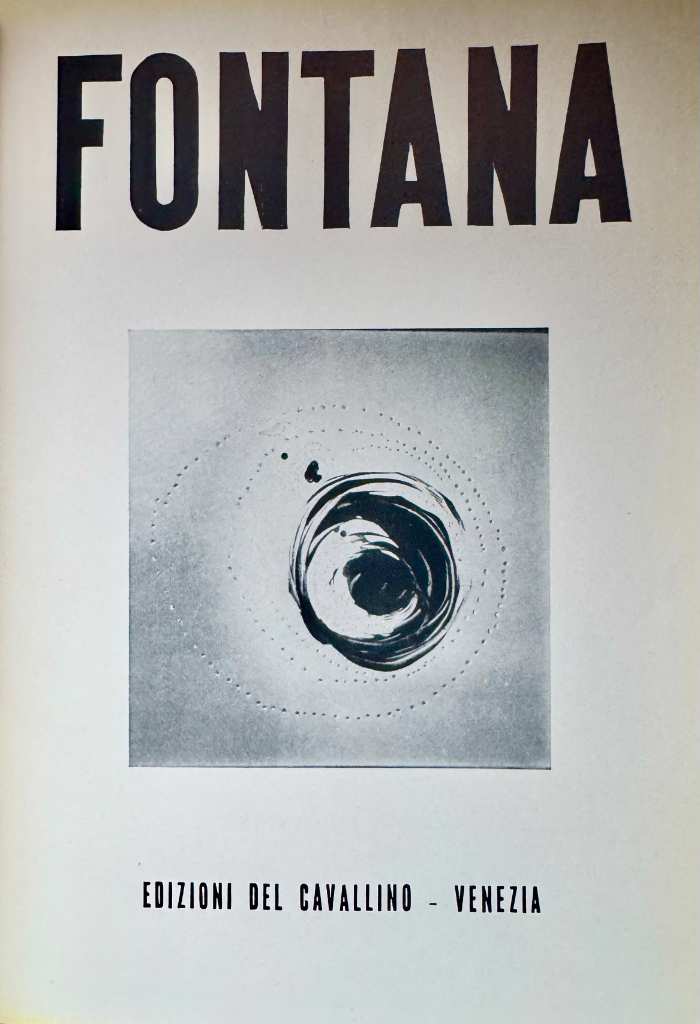
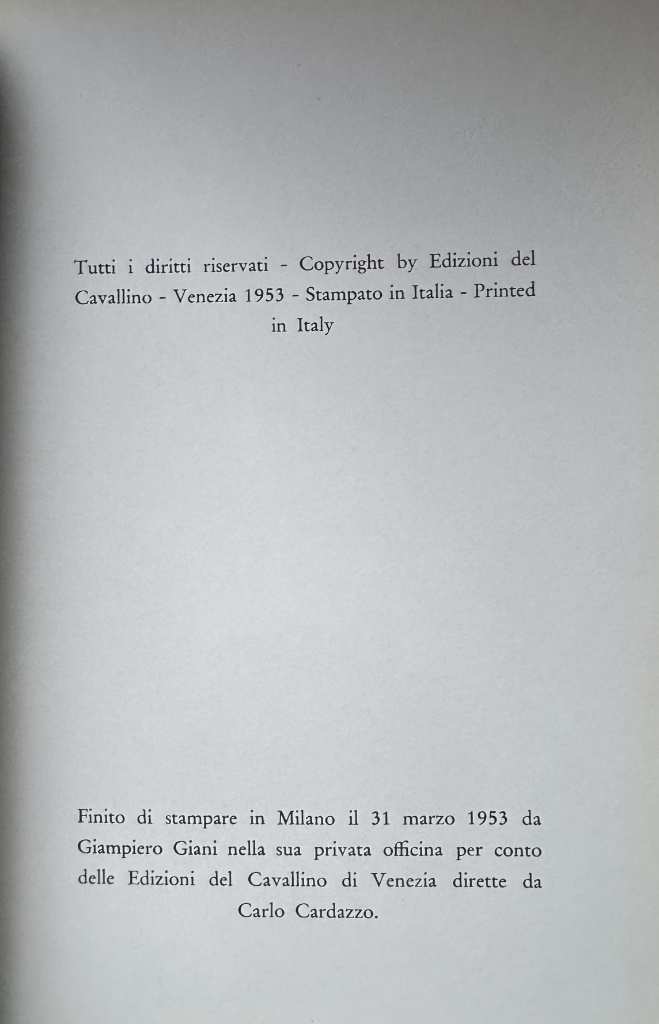
Printed by Giampiero Giani in Milan, the volume distinguishes itself through the quality of its typographic execution and the organic integration between critical text and reproduction of works. The screenprinted cover in grey and yellow reproduces a Concetto Spaziale characterised by the celebrated holes, those breaches in the surface that Fontana had begun to practise from 1949, radically transforming the relationship between work and space. The frontispiece presents a further Spatialist work, marked by gestural sign and concentric perforations, visually anticipating the critical contents of the volume. This editorial choice was not casual: Cardazzo immediately understood that Fontana's revolution required bibliographic support equal to its conceptual scope. Edizioni del Cavallino, active from 1942 to 1972, published some of the most refined monographs dedicated to artists of the Venetian School and European Informel, but the Fontana volume occupies a particular position due to its chronological precocity and the quality of its iconographic apparatus.
Provenance & condition
The rarity of this first edition is attested by its sporadic presence on the international antiquarian market. The principal specialist platforms – Maremagnum, AbeBooks – register occasional appearances, whilst Italian auction houses of reference, from Finarte Milano to Il Ponte, have handled examples in varying conditions over the past two decades. The fragility of the screenprinted cover, particularly sensitive to wear and rubbing, renders examples in excellent condition especially sought after. The paper used for the internal pages, of good weight but subject to the yellowing typical of 1950s publications, requires conservation in a controlled environment to avoid progressive acidification. Examples that have maintained the chromatic freshness of the cover screenprint and the sharpness of internal reproductions constitute the upper tier of the market. The presence of autograph dedications by Fontana or Cardazzo, though not documented in this example, can significantly increase value, as attested by previous auction passages.
Market value
The BookOracle valuation places this example in the €640-1,100 range, reflecting both bibliographic rarity and the historical-artistic importance of the volume. The rarity score of 78/100 and the High index confirm this book's position in the upper segment of the Italian twentieth-century artist's book market. Comparables retrieved through consulted sources show a wide spread, determined primarily by condition and completeness of the example. Volumes in excellent condition, with cover free from abrasions and fresh internal pages, have reached quotations exceeding €1,000 in documented private transactions. Examples with evident defects – abraded cover, foxing, losses – position themselves instead in the lower range, around €600-700. The market for Fontana books has experienced a surge over the past five years, parallel to the critical revaluation of Spatialism and the consolidation of prices for works on canvas and ceramic. Monographs from the 1950s, particularly those published by prestigious houses such as Cavallino, benefit from this trend, representing an accessible alternative for collectors who cannot afford original works but wish to possess authentic testimonies of the Spatialist season.
Why it matters
This 1953 monograph crystallises a crucial moment in Fontana's artistic trajectory. Four years after the first perforation of canvas, the artist had already defined the theoretical parameters of Spatialism through manifestos published between 1947 and 1952, but critical reception was still in a settling phase. The Cavallino volume represents one of the first organic attempts to contextualise Fontana's work, offering contemporaries the tools to understand research that questioned centuries of Western pictorial tradition. For contemporary collecting, possessing this first edition means safeguarding a document that witnesses the genesis of the critical fortune of one of the undisputed masters of the twentieth century. Editorial quality, market rarity and historical importance converge to make this volume an essential piece for any collection dedicated to Italian post-war art or twentieth-century artist's books. In a market increasingly attentive to documentation and provenance, monographs contemporary with artists acquire a value that transcends mere bibliophilic dimension, becoming primary sources for research and irreplaceable testimonies of an era that redefined the boundaries of art.
Comments
Loading…
Sign in or register to leave a comment
Sign in or register