Madrigali by Libero de Libero: Artist's Plaquette with Gentilini Etching
Numbered 1967 edition hand-printed by Franco Prete, featuring an original etching by Franco Gentilini of the Scuola Romana
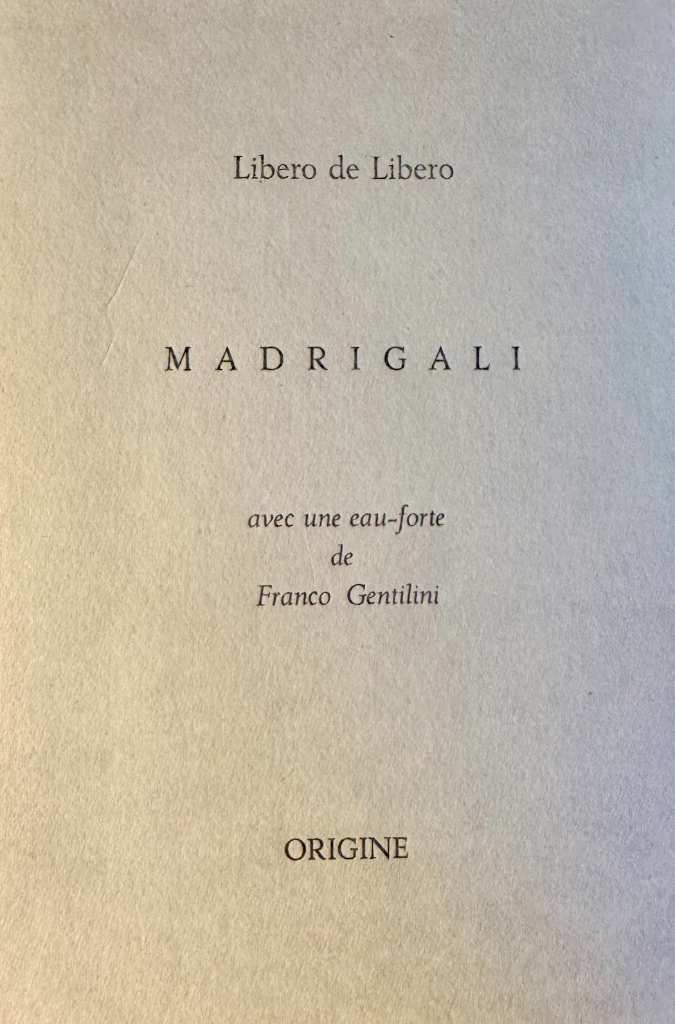
Within the landscape of Italian artist's books from the 1960s, this plaquette represents a felicitous encounter between the hermetic poetry of Libero de Libero and the graphic art of Franco Gentilini. Published on 21 December 1967 by the Luxembourg-based house Origine in the 'le verger' series, the work testifies to the vitality of the livre d'artiste in post-war Italy. Copy number 157 from a limited edition of 200 numbered examples preserves intact the charm of an era when poetry and visual arts engaged in particularly intense dialogue.
Bibliographic Notes
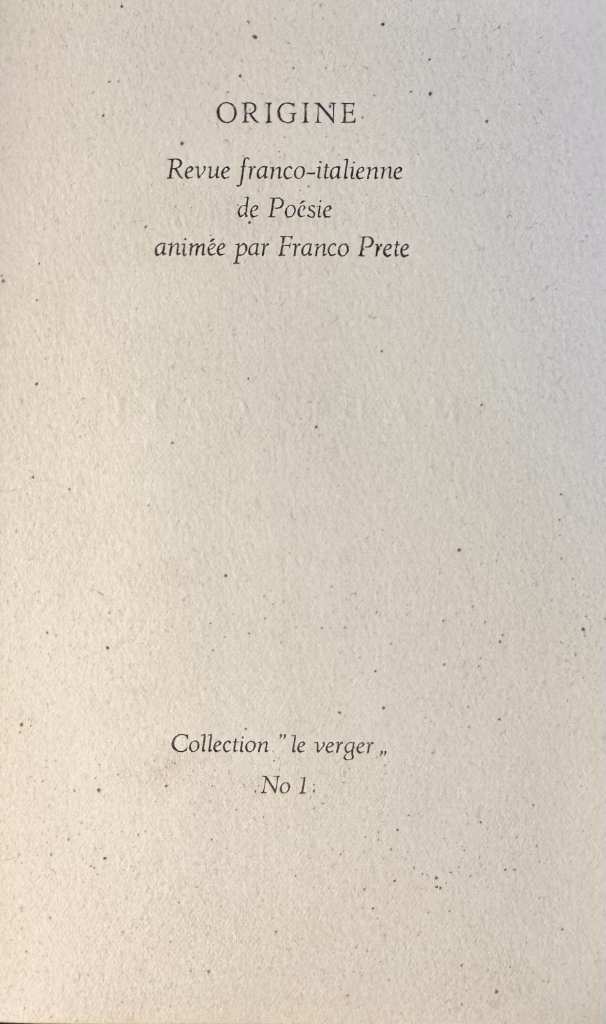
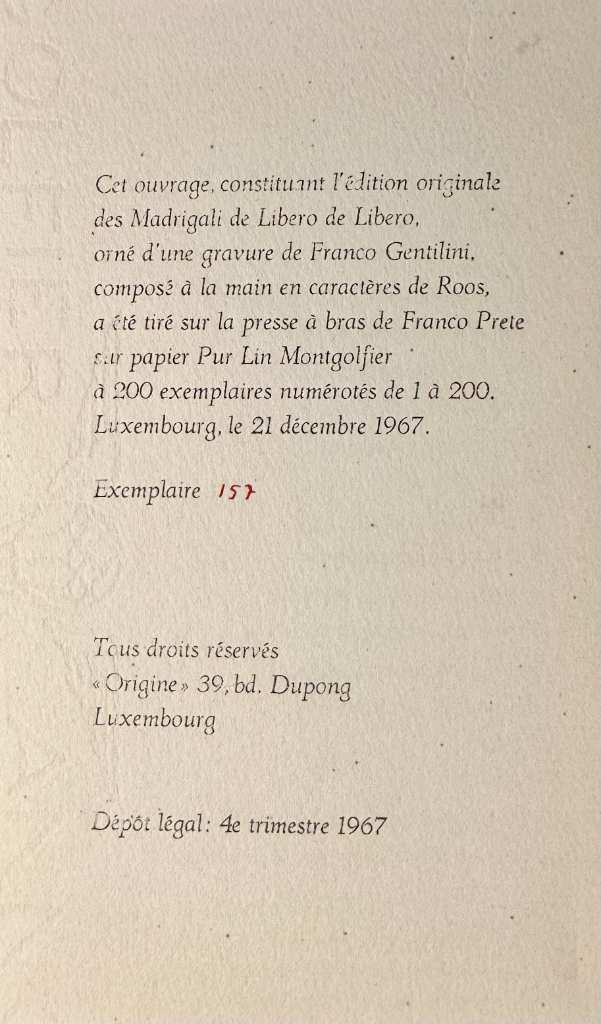
The first edition of Madrigali was printed entirely by hand on Franco Prete's hand press, using Roos type on fine Pur Lin Montgolfier paper. The choice of paper, produced by the historic French mill Montgolfier active since the eighteenth century, confers upon the volume a tactile and visual quality of the first order. The print run of 200 numbered copies places the work in the category of bibliophile editions, intended for an audience of collectors and connoisseurs. The original etching by Franco Gentilini (1909-1981), a central figure of the Scuola Romana alongside Mafai and Scipione, constitutes the visual centrepiece of the publication. Gentilini, known for his style suspended between magic realism and cultivated naïveté, had already collaborated with several Italian poets on similar editorial projects. The 'le verger' series from Origine distinguished itself through artisanal care and attention to material quality, characteristics that made these publications particularly appreciated by European bibliophiles.
Provenance and Condition
The copy presents in good general condition, with the customary patina of time that does not compromise legibility or structural integrity. Light foxing is noted, an oxidation phenomenon common in fine papers from the 1960s, due to the chemical composition of fibres and environmental humidity. This minor defect does not significantly affect collectible value, being considered part of the natural evolution of the paper support. Gentilini's etching maintains its original freshness, with well-preserved inks and intact margins. No tears, losses or restoration interventions are detected. The absence of manuscript annotations or bookplates suggests the copy remained in a private collection without frequent changes of ownership. The handwritten numbering (157/200) appears clear and authentic, consistent with editorial practices of the period.
Market Value
The valuation of €140-220 reflects several market factors. Italian poetry plaquettes from the 1960s with original prints have registered growing interest among collectors of artist's books in recent years, whilst remaining in an accessible price range compared to editions from the 1920s and 1930s. The presence of Gentilini's etching constitutes the element of greatest value: graphic works by the Roman artist are stably quoted in the art market, with single prints reaching higher values. The rarity score of 65/100 indicates moderate scarcity: whilst the print run of 200 copies is not extremely limited, dispersion over time and the fragile nature of the paper support have made finding copies in good condition less frequent. Origine editions are sought after by bibliophiles specialising in twentieth-century art publishing, but do not reach the quotations of more celebrated houses such as Scheiwiller or All'Insegna del Pesce d'Oro. The reference market comprises primarily Italian and French collectors, with occasional appearances in specialist auctions. Comparable copies have been offered on platforms such as Maremagnum and AbeBooks in a price range consistent with the present valuation.
Why It Matters
This plaquette represents a significant document of post-war Italian artistic culture. Libero de Libero (1903-1981), a Ciociarian poet among the most refined of the Italian twentieth century, was an animator of Roman cultural life and a distinguished art critic, capable of weaving bridges between literature and visual arts. His collaboration with Gentilini on this editorial project testifies to the network of relationships that characterised the Roman artistic milieu of the 1960s. The artist's book, understood as a collective work uniting poetry, graphics and typographic craftsmanship, experienced a particularly fruitful season in that decade. Numbered editions printed by hand on fine paper represented an alternative to industrial production, asserting the value of the book-object as precious artefact. For contemporary collectors, works such as this offer an accessible entry point into the world of twentieth-century artist's books, allowing ownership of an original print by a master of the Scuola Romana within a curated and significant editorial context. The combination of hermetic poetry and graphic art, typical of Italian cultural sensibility of the period, confers upon this plaquette a value that transcends the mere sum of its material components.
Comments
Loading…
Sign in or register to leave a comment
Sign in or register