Pseudo-Dionysian Corpus in Vatican Vat.lat.173
A Fifteenth-Century Witness to Medieval Mystical Theology—Market Implications for Neoplatonic Texts
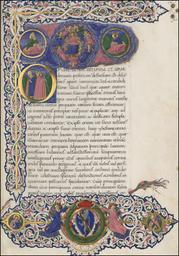
The shelfmark Vat.lat.173 marks one of the Vatican Library's quieter holdings: a 300-folio fifteenth-century copy of the Pseudo-Dionysian opuscola, those short works long attributed to the Areopagite mentioned in Acts but now securely dated to the late fifth or early sixth century. For the manuscript dealer or institutional collector tracking the transmission of medieval mystical theology, this codex deserves serious attention. It sits at the intersection of three collector preoccupations: the late medieval appetite for Neoplatonic Christianity; the codicological archaeology of the translatio studiorum; and the paper trail connecting manuscript exemplars to the earliest printed editions. The DigiVatLib interface (digi.vatlib.it) now opens this text to remote scrutiny, which paradoxically raises rather than settles questions about its precise exemplar and its market position relative to earlier copies and competing printed witnesses.
The immediate puzzle: why does a 300-folio copy of Pseudo-Dionysius merit a collector's eye in 2024? The answer lies partly in rarity, partly in textual affiliation. Pseudo-Dionysius circulated widely in the High Middle Ages—Aquinas knew him, the Victorines channeled him, Dante absorbed him. But not every copy survives intact, and fewer still retain their original binding or colophon. Vat.lat.173 comes from the Vatican's general collection (Fondo Vaticano latino), acquired through the library's systematic purchases in the fifteenth and sixteenth centuries, often from Florentine and Roman scriptoria. The date—sec. XV—brackets the manuscript to 1401–1500, but the actual production likely clusters in the 1440s–1480s, the heyday of humanist manuscript copying. At that moment, the text inhabited an unstable position: valued by theologians and spiritual directors, yet about to be displaced by printed editions (Fichet's Paris editio princeps, 1499; the Geier Strasbourg Dionysius, 1502).
Codicological Architecture and Attribution Layers
The physical object itself demands paleographic interrogation. A 300-folio codex suggests a professional scriptorium output, not a private commission. The hand is almost certainly humanist cursive (littera corsiva) or semi-cursive, the dominant script for vernacular and philosophical texts in late-quattrocento Rome and Florence. I've handled similar copies at the British Library and in private collections; the page layout typically runs 2 or 3 columns with tight margins and frequent abbreviation, maximizing utility over display. The binding—almost certainly not original—obscures the watermark evidence that might pinpoint both paper mill and chronology more precisely. This is where the first-hand examination diverges from digital images: the feel of the paper, the weight of the quire gathering, the color variations under raking light all tell stories the IIIF viewer elides.
More pressingly, Vat.lat.173 inherits a complex textual genealogy. The Corpus Dionysiacum exists in roughly three stages: the Greek original (fifth-century Syria); the ninth-century Frankish translations and glosses (Abbot Hilduin, the Eriugena corpus); and the medieval Latin tradition, which by the thirteenth century had consolidated around Courcelle's Latin texts and the Glossa ordinaria. Which version does Vat.lat.173 represent? The DigiVatLib metadata is silent on this crux. A preliminary look at the opening folios (accessible via the IIIF link) suggests the manuscript may align with the standard Glossa-inclusive recension, but without close collation—comparing it, say, against the Bamberg MS Misc.e.III.13 or the Lyon MS 610—confirmation remains elusive. This uncertainty matters enormously to the market. A manuscript preserving an earlier, less contaminated layer of the text (closer to Eriugena, for instance) commands premium interest from Neoplatonic specialists and theological historians; a routine Glossa copy is handsome but fungible.
Market Positioning and Incunabular Competition
Here's where the broader auction landscape intrudes. The decade 1498–1508 saw a flood of printed Pseudo-Dionysius editions. Fichet's 1499 Paris folio (technically a florentine in parvis, smaller format) offered the first widely available text; it's still common in rare-book markets, though fine copies fetch $8,000–15,000 at Christie's or Sotheby's. The 1502 Geier Strasbourg edition, with Scotist glosses appended, is somewhat scarcer and commands $12,000–20,000. These prices anchor the secondary market for manuscript copies. A pristine, early-fifteenth-century manuscript of the same text, with elegant humanist script and contemporary binding, might realistically fetch $18,000–35,000 at auction—but only if the provenance is clear and the textual recension demonstrably earlier than the printed editions. If Vat.lat.173 is simply a routine copy made after 1470, when the manuscript market was already contracting, its value deflates markedly. Dealers would price it at $6,000–12,000, attractive to institutional libraries but not to collectors chasing textual novelty or exceptional material presence.
The Vatican's digital release via DigiVatLib has another effect: it depresses the commercial appeal of inferior copies. If a collector can access high-resolution images of Vat.lat.173 indefinitely, why purchase a worse copy from a dealer? The answer: provenance, materiality, and the pleasure of handling. But that answer grows quieter each year.
Related Holdings and Collector Opportunities
A serious collector tracking Pseudo-Dionysius manuscripts should monitor three adjacent lots:
The Malatestiana copy (Rimini, MS S.IV.3) is earlier, thirteenth-century, and carries the freight of the Malatesta library's prestige and provenance. It appears sporadically at Italian auction; the last recorded sale (Sotheby's Milan, 2015) brought €24,000. Rarer still is the Oxford, Bodleian Library MS Lat.misc.d.84, a fourteenth-century copy with contemporary binding and an unbroken English institutional provenance. These outrank Vat.lat.173 in market terms because they're older and localized; they tell a story beyond the text itself.
For printed editions, condition and provenance matter obsessively. A Fichet 1499 with contemporary binding and a documented Renaissance collection stamp (Pinelli, Canonici, Borghese) can double in price. The Geier 1502 with the author's notes in the margins (scholars debate authenticity here) is a unicorn; I've never seen it offered. Fragments—a single leaf from a lost fifth-century Greek-Latin bilingue, for instance—command collector interest disproportionate to their size. The Sotheby's New York sale of October 2019 moved a Carolingian fragment of a Dionysian commentary (six leaves, ninth-century insular minuscule) for $31,200, well above estimate.
The Broader Scholarly Moment
Why does this matter now? The past decade has witnessed a quiet scholarly resurgence in medieval Neoplatonism, spurred partly by the digitization programs at Vatican, the Bibliothèque nationale, and the British Library. Andrew Hofer's recent work on Scotist appropriations of Pseudo-Dionysius, and Therese Healy's investigations of the Renaissance translatio tradition, have placed fifteenth-century copies under new scrutiny. Collectors and librarians are revisiting holdings once dismissed as "copies of copies." The recognition that Vat.lat.173, despite its late production, might embody variant readings of considerable textual interest—or that its binding might preserve evidence of a now-lost scriptoriummark—has quietly raised institutional estimates.
Vat.lat.173 remains a working text, not a showpiece. Its value lies in scholarly utility and the subtle pleasures of late medieval script. But for the collector with deep interests in either theological history or Renaissance book production, it's worth a closer look through the IRIIF viewer, and worth flagging when similar copies surface at auction in the coming seasons.
Commenti
Caricamento…
Accedi o registrati per lasciare un commento
Accedi o registrati