Eiko on Stage: Callaway's Monograph on the Visionary Genius of Eiko Ishioka
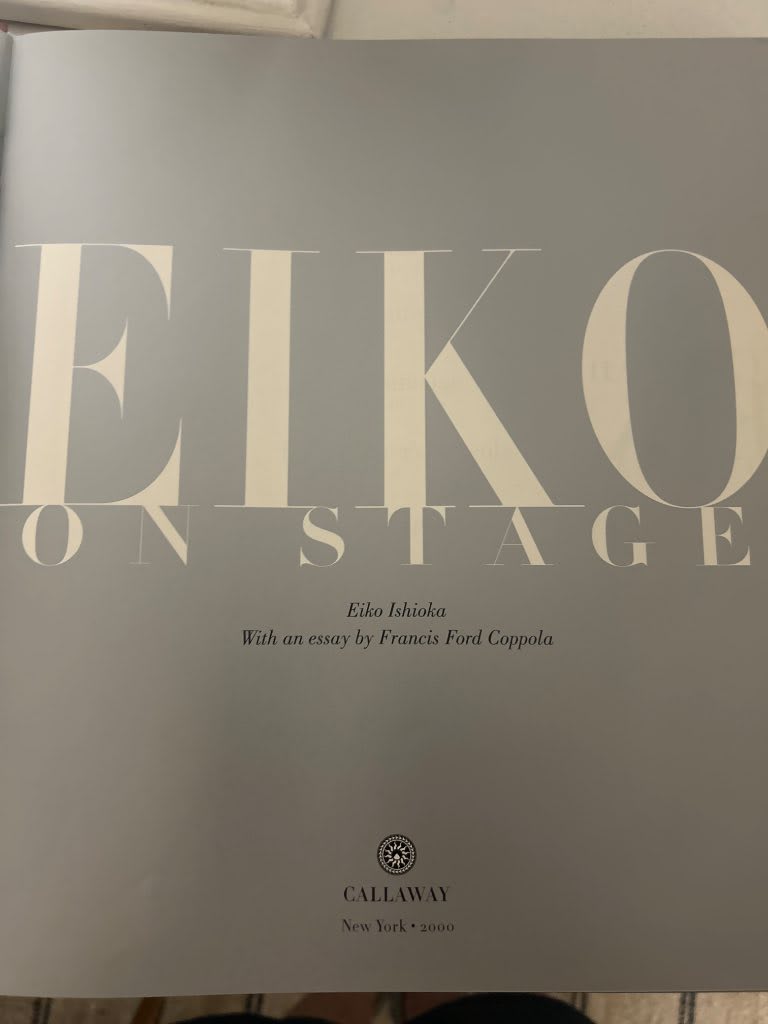
First edition 2000 monograph dedicated to the Oscar-winning Japanese designer, with essay by Francis Ford Coppola
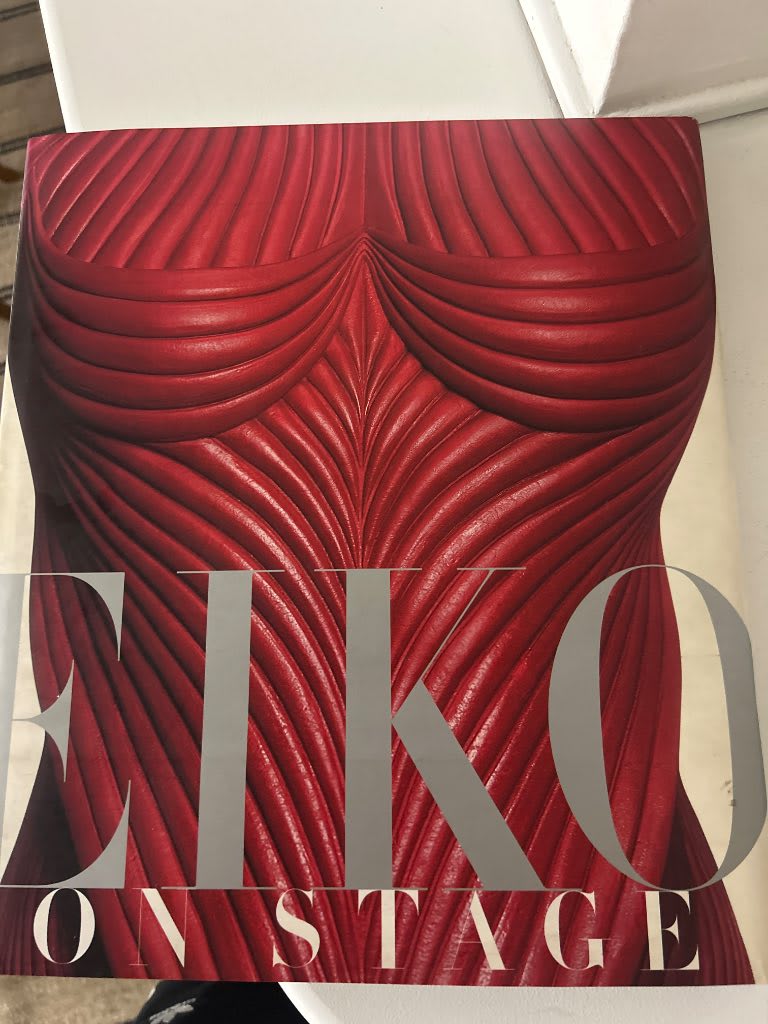
The monograph Eiko on Stage, published by Callaway in 2000, represents a fundamental document for understanding the work of Eiko Ishioka (1938-2012), the Japanese designer who revolutionised contemporary costume design for cinema and theatre. The copy under examination, a first edition with illustrated dust jacket featuring the iconic sculptural red corset created for Bram Stoker's Dracula, testifies to the radical approach of an artist who successfully fused Japanese tradition with Western avant-garde.
Bibliographic Notes
The volume, published in large format by the prestigious New York house Callaway, distinguishes itself through the editorial quality that characterises all productions from this imprint specialising in art monographs. The hardcover dust jacket presents the image of the red corset that became emblematic of Ishioka's work for Francis Ford Coppola's film, winner of the Academy Award for Best Costume Design in 1993. The introductory essay by the Californian director offers direct testimony of the artistic collaboration that produced one of the most memorable achievements in 1990s cinema.
The iconographic apparatus, curated with the meticulousness typical of Callaway editions, documents through high-quality colour photographs the theatrical, operatic and cinematic productions that marked Ishioka's career. Particular attention is devoted to collaborations with Paul Schrader on Mishima: A Life in Four Chapters (1985), to operatic productions that redefined contemporary stage aesthetics, and to theatrical installations that anticipated her extreme visual language.
Provenance and Condition
The copy presents itself in good general condition, with intact dust jacket and editorial boards free from significant structural defects. As often occurs with large-format volumes published in the last twenty-five years, wear concentrates primarily on the dust jacket edges, an element particularly exposed in monographs destined for frequent consultation. The interior maintains original chromatic freshness, a crucial aspect for a volume whose raison d'être resides in photographic reproduction quality.
No elements of particular provenance distinction emerge: this is an ordinary trade copy, lacking dedications, annotations or other signs of belonging to significant collections. The first edition print run was substantial, destined both for the professional market of design and costume and for the broader public of cinema and visual arts enthusiasts.
Market Value
The BookOracle valuation places this copy in the €45-70 range, an estimate that accurately reflects current availability on the secondary market. Monitoring of principal antiquarian and collectible commerce platforms (AbeBooks, Amazon Marketplace, eBay, Alibris) confirms constant presence of copies in varying conditions, with prices oscillating between €40 for examples with evident defects and €90 for copies in excellent condition or with protected dust jacket.
The rarity score of 25/100 (Low) reflects this title's nature: a relatively recent publication, printed in significant commercial run, dedicated to a major artist but not yet entered into the category of "rare books" properly speaking. Demand remains stable but not speculative, sustained primarily by sector professionals (costume designers, scenographers, designers) and collectors of cinematic monographs.
Recent comparables show completed sales on eBay between €35 and €65, whilst on AbeBooks specialist booksellers' quotations settle between €50 and €85. The difference reflects the platforms' different positioning: competitive auction in the first case, fixed price with professional guarantee in the second.
Why It Matters
Beyond its contained monetary value, Eiko on Stage maintains significant cultural relevance as document of a transitional moment in costume design. Eiko Ishioka represents the meeting point between Japanese aesthetic tradition of ma (negative space) and wabi-sabi (the beauty of imperfection) and the maximalist aesthetic of 1990s Hollywood cinema. Her sculptural costumes, which transformed actors into living installations, anticipated trends that would become dominant in fantasy cinema of the new millennium.
The monograph also documents collaborations that marked the history of contemporary theatrical and operatic costume, from Wagnerian productions to installations for Cirque du Soleil. For scholars and professionals, it remains an indispensable reference, a consultation volume that justifies presence in specialist libraries even in absence of particular collectible value.
For the private collector, acquisition at this price level represents an accessible opportunity to document the work of an artist whose influence continues to manifest in contemporary design, from fashion to cinema, from advertising to performance arts. A modest investment in visual culture that maintains intact utility over twenty years after publication.
Comments
Loading…
Sign in or register to leave a comment
Sign in or register