Max Ernst 1950: livre d'artiste with signed original lithographs
Copy 50/50 of the rare Berggruen edition with two pencil-signed colour lithographs, testament to the Ernst-Berggruen partnership in post-war Paris
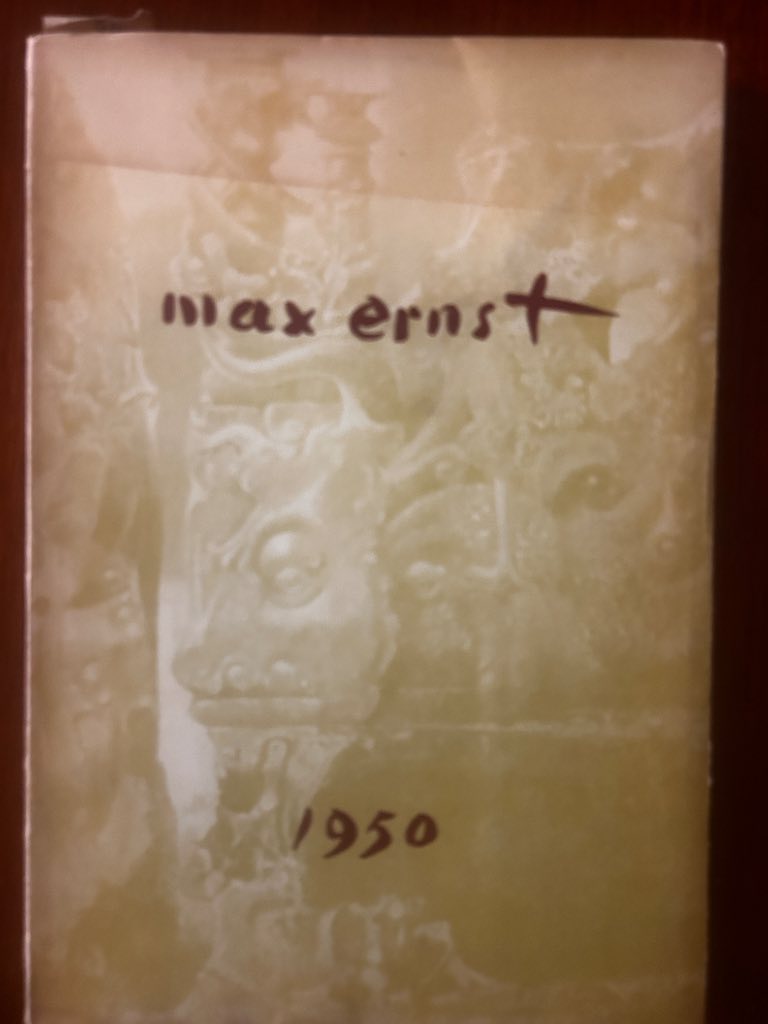
Among the livres d'artiste of the post-war period, few collaborations embody the spirit of mature Surrealism as intensely as that between Max Ernst and Heinz Berggruen. This 1950 publication from Berggruen's Parisian gallery represents not merely a technical summit of colour lithography, but also a historical document of the European art market in reconstruction. Copy number 50 of 50, the last of the numbered series, carries the particular fascination of concluding exemplars: that liminal position between regular edition and hors commerce which collectors have always regarded with special interest.
Bibliographic notes
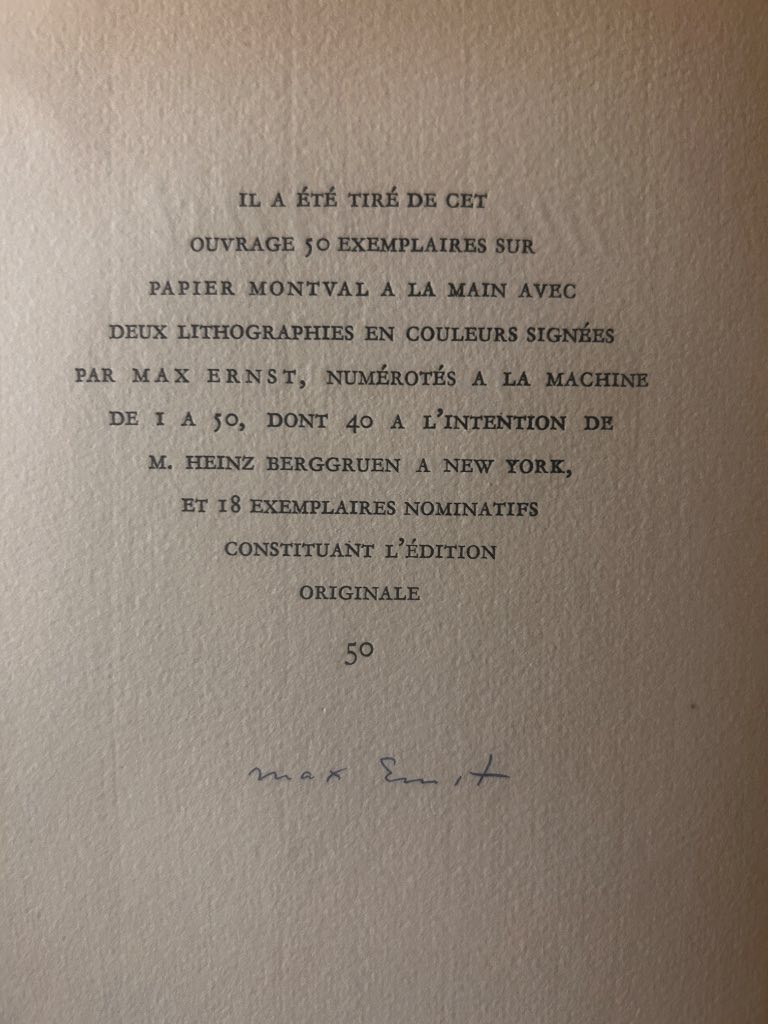
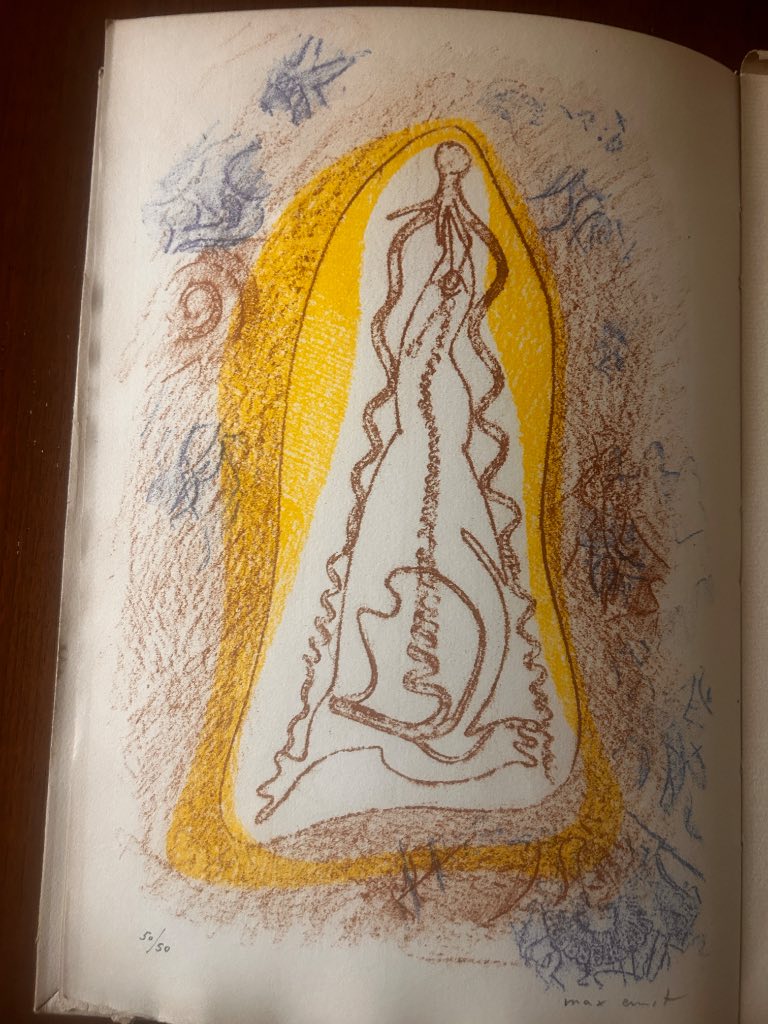
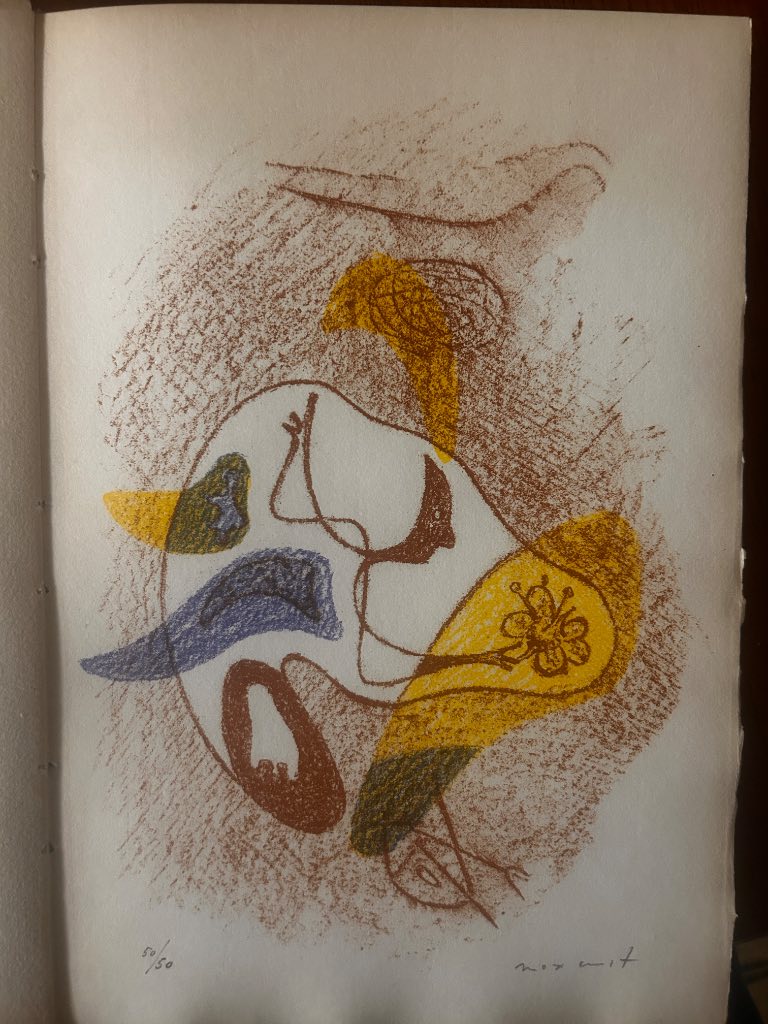
The edition was published by Heinz Berggruen in Paris in 1950, at a crucial moment for both protagonists. Ernst, having returned to Europe after American exile, was reasserting his centrality to the international art scene. Berggruen, a young German gallerist who had taken refuge in France, was building those relationships with Picasso, Klee and the modern masters that would make his gallery an absolute point of reference. The print run was severely limited: 50 numbered copies on handmade Montval paper, plus 18 nominative copies destined for selected collectors and collaborators. The volume contains two original colour lithographs, both signed in pencil by the artist and numbered 50/50, alongside Ernst's autograph signature on the colophon. The Montval paper, produced by hand, confers upon the colours that depth and softness which mechanical reproductions cannot restore. The publisher's wrappers feature on the cover a photographic reproduction of an Ernst sculpture, an element connecting the graphic work to the artist's three-dimensional production.
Provenance & condition
The copy under examination, marked 50/50, occupies that final position in the edition which was often reserved by the publisher or artist himself. Documentation regarding the exemplar's first destination is not available, a circumstance not infrequent for publications of this type distributed through private channels. The state of preservation is good and consistent with the seventy-three years elapsed since publication. The publisher's wrappers maintain structural integrity, the lithographs show no significant foxing nor evident chromatic alterations. The Montval paper, by its nature more resistant to ageing than industrial papers, has preserved the freshness of the original colours. The absence of restoration or conservation interventions constitutes an element of distinction, attesting to careful custody over the decades. Ernst's pencil signatures on the lithographs appear sharp, without smudging or graphite oxidation.
Market value
The valuation of €4,500-7,500 rests upon analysis of recent transactions at the principal international auction houses specialising in prints and multiples. Christie's, Sotheby's Paris and Swann Galleries have recorded over the past five years hammer prices for individual Ernst lithographs from the same period ranging between €2,000 and €4,500 each, depending upon dimensions, rarity and presence of autograph signature. A complete livre d'artiste containing two signed lithographs plus the colophon signature multiplies value beyond the simple sum of parts: the book format, the extremely limited print run and the collaboration with Berggruen constitute significant multiplying factors. The position 50/50, last of the numbered series, adds a premium estimated between 10 and 15% compared to intermediate exemplars. The market for Ernst remains solid, sustained by constant interest in historical Surrealism and the presence of his works in major international museums. The upper band of the estimate (€7,500) proves attainable in the presence of provenance documentation or in auction contexts with strong participation from specialist collectors.
Why it matters
This livre d'artiste transcends the dimension of mere collectible object to assume the value of historical testimony. It documents the moment when Ernst, after the American years marked by war and exile, was reknotting threads with Europe and with that Paris which had been the cradle of the Surrealist movement. The collaboration with Berggruen also represents a significant chapter in art market history: the young German gallerist was building, exemplar by exemplar, that collection and network of relationships which would make him one of the most influential dealers of the twentieth century. The lithographs contained in the volume show Ernst in full expressive maturity: the biomorphic figures, the warm colours, that capacity to evoke dreamlike worlds through apparently simple signs belong to the consolidated vocabulary of a sixty-year-old master. For the contemporary collector, possessing this exemplar means safeguarding a fragment of that unrepeatable season when art, publishing and market intertwined in forms impossible today, when print runs of fifty copies could still economically sustain ambitious editorial projects and when an artist's pencil signature on Montval paper sufficed to create an object of desire destined to traverse the decades.
Comments
Loading…
Sign in or register to leave a comment
Sign in or register