Tauromaquia by Salvador Aulestia: bullfighting art and poetry in 1953 Mexico
A rare publication uniting ten modernist drawings and ten poems, testament to Basque exile and Mexican bullfighting culture
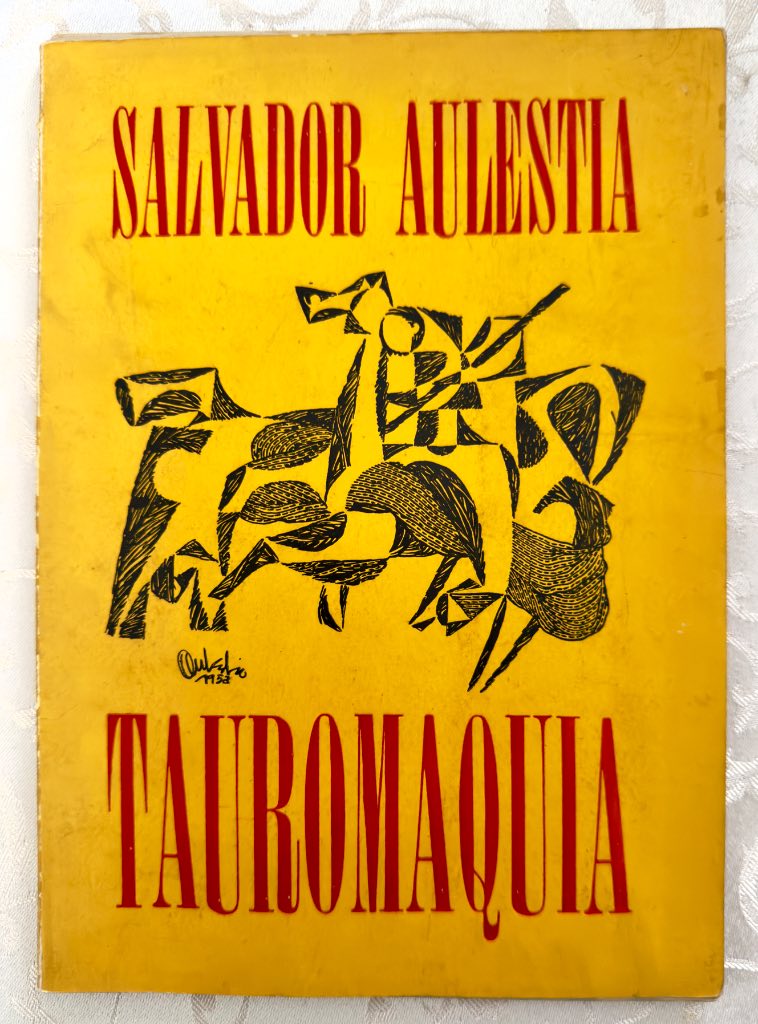
In the landscape of post-war Mexican publishing, few works embody with such intensity the encounter between European exile and bullfighting tradition as Salvador Aulestia's Tauromaquia – 10 Dibujos, 10 Poemas. Printed in 1953, this work represents a singular document of the artistic and literary activity of a Basque intellectual who found refuge in Mexico during the darkest years of Franco's dictatorship, bringing with him a refined critical sensibility and a visceral passion for the corrida.
Bibliographic notes
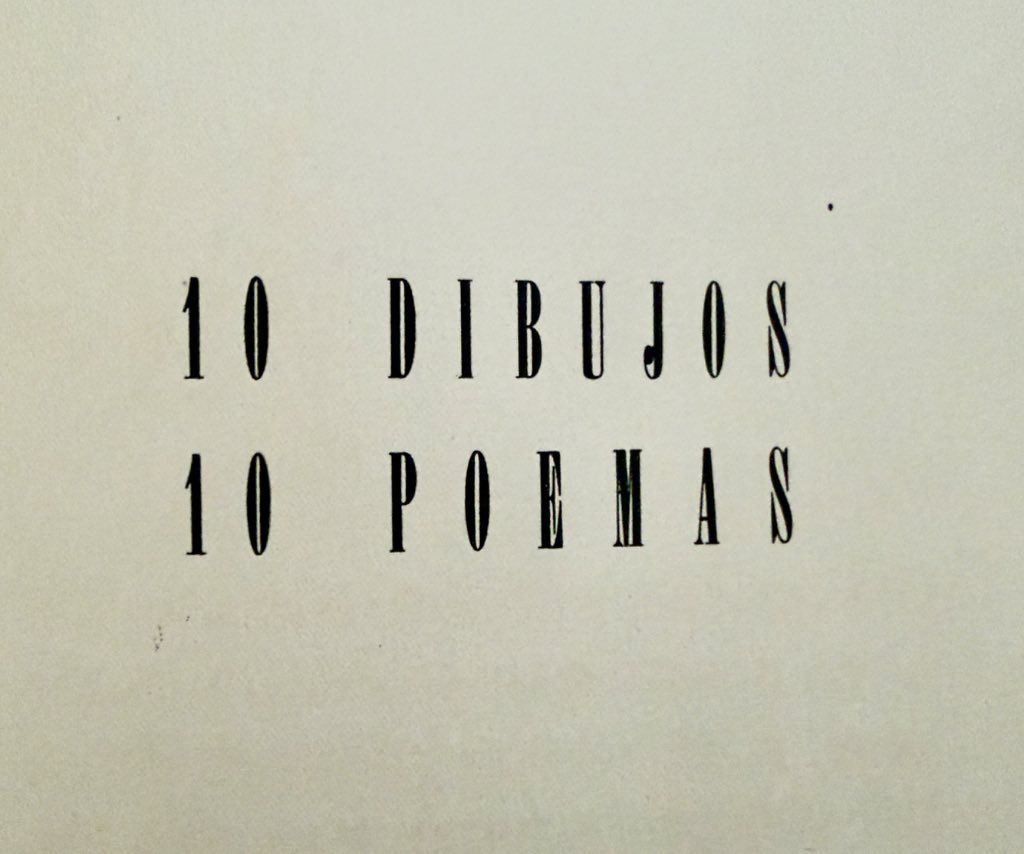
The volume presents itself as a medium-format publication, bound with a yellow cover bearing a drawing signed and dated by the author himself. The title page clearly identifies the content: ten ink graphic compositions accompanied by an equal number of poems, all dedicated to the bullfighting theme. The print run, though not explicitly declared, appears extremely limited, destined in all likelihood for a restricted circle of collectors, aficionados and members of the intellectual community in exile. No subsequent reprints are known, which confers upon this first edition the status of a unique edition. The graphic technique employed by Aulestia reveals Cubist and Expressionist influences, with dynamic lines capturing the movement and tension of the corrida in a modernist key, far removed from more conventional folkloristic representations.
Provenance & condition
The present copy comes from a private collection and displays the characteristic patina of time typical of Mexican publications from the 1950s: slight paper oxidation, minimal marginal foxing and a natural browning of edges. The yellow cover maintains its chromatic vivacity, with the Cubist drawing perfectly legible and the autograph signature well preserved. The interior shows signs of attentive but respectful reading, without invasive annotations or structural damage. The binding, presumably artisanal, holds firmly, though displaying the physiological loosening due to seventy years of existence. No missing pages or evident restorations are noted. Overall, the state of conservation may be defined as good, compatible with the age and ephemeral nature of an extremely limited-run publication.
Market value
The BookOracle valuation places this copy in the €80-150 range, with a discrete rarity index (52/100). This estimate reflects several factors: the presumably very limited print run, the autograph nature of the cover drawing, the documentary value of the work as testimony to Basque intellectual exile in Mexico, and growing interest in twentieth-century Latin American artist publications. However, Aulestia's relative obscurity outside specialist circles of bullfighting criticism and Republican exile studies limits commercial appeal among the broader collecting public. Research conducted on AbeBooks, ZVAB and Iberlibro yielded no comparable copies for sale, confirming market scarcity but also the difficulty of establishing consolidated auction precedents. For collectors of tauromachiana, exile literature or twentieth-century Mexican graphic art, the work represents a niche but significant acquisition, with revaluation potential should academic interest in Aulestia intensify.
Why it matters
Beyond monetary value, Aulestia's Tauromaquia merits attention for historical and cultural reasons. The work documents a crucial moment in twentieth-century intellectual history: the encounter between Spanish Republican exile and the Mexican society that received it. Aulestia, a bullfighting critic of Basque formation and diplomat fleeing Francoism, found in Mexico not only refuge but also an audience receptive to his modernist vision of the corrida. His drawings, far from picturesque costumbrismo, dialogue with European avant-gardes and Mexican muralism, proposing a reading of bullfighting as existential drama rather than mere folkloric spectacle. The poems accompanying the images complete this discourse, exploring themes of death, courage and beauty with sober, incisive language. For scholars of Basque exile, collectors of tauromachiana and those interested in intersections between literature and visual arts, this volume represents a precious testimony to an era and sensibility now remote, yet still capable of speaking to the present.
Comments
Loading…
Sign in or register to leave a comment
Sign in or register