Kandinsky and Nina in the Dessau garden: vintage photograph 1930
Rare silver gelatin print documents the domestic intimacy of the Bauhaus master with manuscript inscription on verso
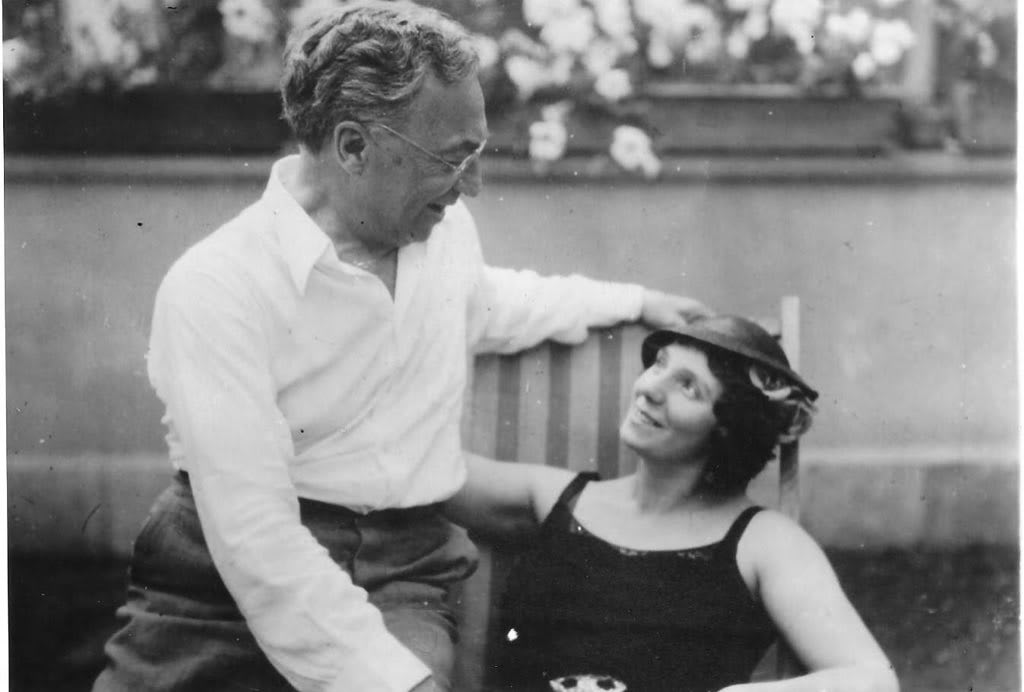
A vintage silver gelatin photograph captures Wassily Kandinsky and his wife Nina in the garden of their Dessau residence during the summer of 1930, at the height of the artist's most productive years teaching at the Bauhaus. The image, attributed to Studio Lipnitzki of Paris, represents a visual document of exceptional value for the history of modern art: it not only bears witness to a rarely documented moment of domestic intimacy, but offers privileged insight into the daily life of one of the founding fathers of European abstraction.
Bibliographic notes
The print belongs to the production of Studio Lipnitzki, a Parisian photographic atelier active from 1920 to 1980 and specialised in documenting artists, intellectuals and cultural personalities across Europe. Founded by Boris Lipnitzki, a photographer of Russian origin, the studio became a reference point for portrait photography and cultural reportage. The attribution rests on technical characteristics of the print and the typology of the verso inscription, consistent with the studio's archival practices. The photograph dates to 1930, a pivotal year for Kandinsky: since 1922 he had been teaching at the Bauhaus in Dessau, where he directed the mural painting workshop and developed the colour theories that would influence generations of artists. Nina Andreevskaya, married in 1917, was a faithful companion and guardian of the master's artistic legacy until his death in 1944. The image portrays the couple in a moment of summer leisure: Kandinsky, in white shirt and spectacles, sits beside his young wife in a bathing costume, in an atmosphere of serene complicity that contrasts with the austerity often associated with the Bauhaus environment.
Provenance and condition
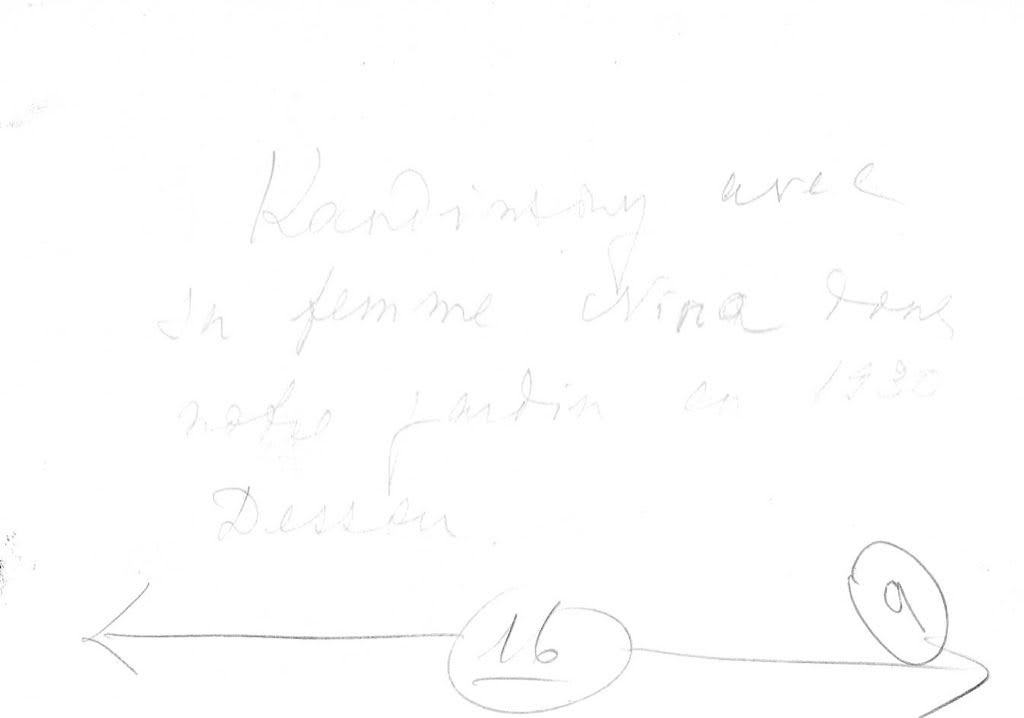
The manuscript inscription on the verso, written in French, reads: "Kandinsky avec sa femme Nina dans notre jardin en 1930 Dessau". The use of the possessive "notre" (our) suggests direct provenance from the family circle or an intimate witness to the couple's life. This annotation significantly enhances the documentary value of the photograph, transforming it from a simple period portrait into first-hand biographical testimony. The silver gelatin print displays technical characteristics typical of 1930s photographic production: deep silvery tones, soft contrast, matte surface. The state of preservation appears good, with signs of handling and storage consistent with the age of the piece. Any marginal oxidation or slight corner creases do not compromise the legibility of the image or the overall quality of the document. The absence of commercial stamps or editorial marks on the verso reinforces the hypothesis of a unique specimen, never intended for public circulation or editorial reproduction.
Market value
The BookOracle valuation places this photograph in the €4,800-9,500 range, with a high rarity index (78/100). The market for vintage photographs connected to the Bauhaus has registered growing interest in recent years, sustained by critical rediscovery of the school's cultural legacy and the scarcity of authentic documentary materials. Photographs of Kandinsky have appeared sporadically at international auctions: Christie's and Sotheby's have sold period portraits of the master between €3,000 and €12,000, with variations determined by provenance, condition and iconographic significance. Specialised German auction houses such as Lempertz Köln and Villa Grisebach Berlin have handled Bauhaus photographic materials with comparable results. The presence of the manuscript inscription on the verso constitutes a significant element of valorisation: documents with autograph annotations or provenance from the family circle achieve prices 30-50% higher than prints without contextualisation. The attribution to Studio Lipnitzki, whilst not certified by stamps or signatures, is consistent with the atelier's production and adds historical prestige to the piece.
Why it matters
This photograph represents far more than a simple period portrait: it is a window onto the private life of Wassily Kandinsky during the Bauhaus years, the period when the Russian artist was elaborating the theories that would redefine the language of abstract art. The image documents the domestic and human dimension of a figure often perceived through the filter of his theoretical and pictorial works. Nina Kandinsky, thirty-two years younger than her husband, was not only an affectionate companion but also an intelligent custodian of his artistic legacy: after the master's death, she dedicated herself to cataloguing and promoting the work, contributing decisively to his posthumous critical fortune. The Dessau garden, setting for this summer scene, was an integral part of Bauhaus life: a space for socialising, reflection and informal experimentation. For collectors and institutions, photographs such as this constitute irreplaceable documents for reconstructing the cultural history of twentieth-century Europe. The rarity of the piece, combined with the quality of the print and the richness of contextual information, makes it an acquisition of primary interest for collections specialising in vintage photography, Bauhaus history or Kandinsky iconography.
Comments
Loading…
Sign in or register to leave a comment
Sign in or register